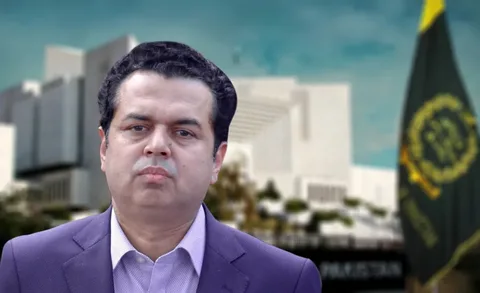
Minister of State for Interior Tallal Chaudhry said on Monday that the Khyber Pakhtunkhwa government has not made adequate efforts against terrorism. He named flaws in its leadership, resources and use of authority. The remarks add to a growing dispute between Islamabad and Peshawar over who is responsible for the province’s security. The KP government’s counter-terrorism record is now the centre of a sharp political argument.
Background: A Province That Keeps Paying the Price
Khyber Pakhtunkhwa has faced militant violence for many years, and its police have lost personnel in the fight. Every new attack reopens the same question: who should be doing more, the province or the federation? Security challenges in KP are rarely discussed without a political edge, and this week was no different.
The latest round began after a deadly suicide blast in Dera Ismail Khan on Saturday. Chaudhry noted that KP Chief Minister Sohail Afridi had held a very long press conference in the city after the attack. The federal minister’s criticism on Monday was largely a response to what was, and was not, said at that briefing.
The argument did not start with the blast, either. Days earlier, Chaudhry had raised objections to a proposed new police law in the province, so his comments on Monday came on top of an already tense exchange over terrorism in Khyber Pakhtunkhwa.
Details: What Tallal Chaudhry Said About the KP Government
Speaking to reporters in Islamabad, Chaudhry focused first on how the provincial leadership talks about the threat. He asked why the KP government did not condemn Afghanistan and why it showed a soft attitude towards it. He also questioned why the provincial leadership avoided naming the real enemy or the source of the militant proxies.
At the start of the press conference, he said terrorist proxies are financed from the eastern border and have their hideouts on the western border. These are the minister’s own claims, and the federal government has made similar assertions in the past. Readers should treat them as his position and not as findings verified independently.
Leadership and Authority
On leadership, the complaint was about clarity and commitment. Chaudhry alleged that KP government representatives did not regularly attend security meetings, even while the province sought funds through the National Finance Commission. He said implementing the 14-point National Action Plan was necessary to strengthen the fight against terrorism.
The question of authority was tied to the province’s plan to replace its 2017 police law. Chaudhry warned that changes to the police command structure could hurt the force’s ability to maintain law and order and to fight terrorism. He also said the proposed law would be challenged in the Supreme Court.
Resources for the Police and CTD
Resources were the third pillar of his argument, and he gave concrete examples. He said Counter Terrorism Department facilities in Punjab and Islamabad have concrete walls and fortified compounds, while rented CTD buildings in KP have been attacked before, with deaths, injuries and destroyed buildings. He argued such premises are unsuitable for housing counter-terrorism personnel and detainees.
He also criticised what he called inadequate resources for KP Police, including lower salaries than forces in other provinces, and questioned the supply of protective gear, armoured vehicles, forensic laboratories and housing for personnel. He further claimed that some bulletproof vehicles given to security personnel had been returned for political reasons. These are allegations, and the KP government’s side of each point should be sought.
Quotes: In the Minister’s Own Words
Chaudhry used blunt language throughout the week. On the police law he said, “You cannot use such legislation to structurally dismantle its command structure.” On the daily reality of KP officers, he told journalists to compare the two systems directly. “Go and compare an Islamabad police station with a K-P police station,” he said.
He also said the relevant budgets and authority sit with the provincial leadership. Facilities such as Safe City, forensic labs and modern equipment, he said, are the responsibility of the KP government, with the chief minister and provincial cabinet controlling the money. That is the core of his case: the federal government says responsibility for these gaps lies with Peshawar.
Impact: Regional Security and Political Fallout
The immediate impact is political. Critics argue that continuing discord between Islamabad and Peshawar weakens coordinated counter-terrorism operations and can leave vulnerable communities exposed to militant violence. When two governments trade accusations after every attack, the public hears blame and very little about what changes on the ground.
There is a regional angle too. By pointing at Afghanistan and at cross-border proxies, the federal government is placing KP’s security problem inside a wider foreign policy debate. How Pakistan handles its western border, and how the province and the centre share intelligence, will shape whether communities near the border feel safer or not.
For police on the ground, the stakes are practical. Salaries, armoured vehicles, forensic support and secure buildings decide how well an officer can respond, and a dispute over command structure adds uncertainty for a force that is already stretched.
Conclusion: What Happens Next
The next few weeks will show whether this stays a war of words or turns into cooperation. Federal authorities are expected to review inter-provincial security coordination protocols in upcoming high-level meetings. The proposed KP Police Act is also likely to end up in court, which could take months to resolve.
For now, the facts on offer come mostly from the federal side. The reports available at the time of writing did not carry a detailed reply from the PTI-led provincial government to these specific charges. Until that reply comes, the debate over terrorism in Khyber Pakhtunkhwa remains open, and people in the province are the ones waiting for a clear answer.
FAQs
What flaws did the minister identify in the KP government’s counter-terrorism efforts?
Tallal Chaudhry named three broad flaws: leadership, resources and use of authority. On leadership, he questioned why the provincial government would not openly condemn Afghanistan or name the sources of militant proxies, and he alleged that KP representatives were not regular participants in security meetings. On authority, he objected to the proposed police law, which he says weakens the police chain of command.
On resources, he said the police lack enough equipment, better salaries, forensic labs and secure buildings. All of these are his claims. They reflect the federal government’s view of the KP government’s counter-terrorism record and have not been independently verified.
What leadership and resource challenges are affecting the counter-terror fight in KP?
Chaudhry described the leadership challenge as one of ambiguity. In his view, the provincial government’s public messaging after attacks is not direct enough about who is behind them. He also suggested that weak participation in coordination forums makes it harder to follow a single national plan, including the 14-point National Action Plan.
On resources, he pointed to lower police pay compared with other provinces, missing protective gear, rented and vulnerable CTD buildings, and the slow completion of the Safe City Peshawar project. He argued that these gaps directly affect how safely officers can work and how quickly cases can be investigated.
What role does the KP government have in tackling terrorism in the province?
Policing is largely a provincial subject, so the KP government controls the budget, the police administration and the provincial cabinet’s decisions on equipment and infrastructure. That is why the federal minister keeps returning to Peshawar when he talks about shortages. Under this arrangement, the province is expected to fund and run its police and counter-terrorism units, while the federal government supports with intelligence, coordination and policy through bodies such as NACTA.
The province is also a party to national security planning. How well it works with Islamabad on intelligence sharing and joint meetings is a major factor in how effective the wider response is.